
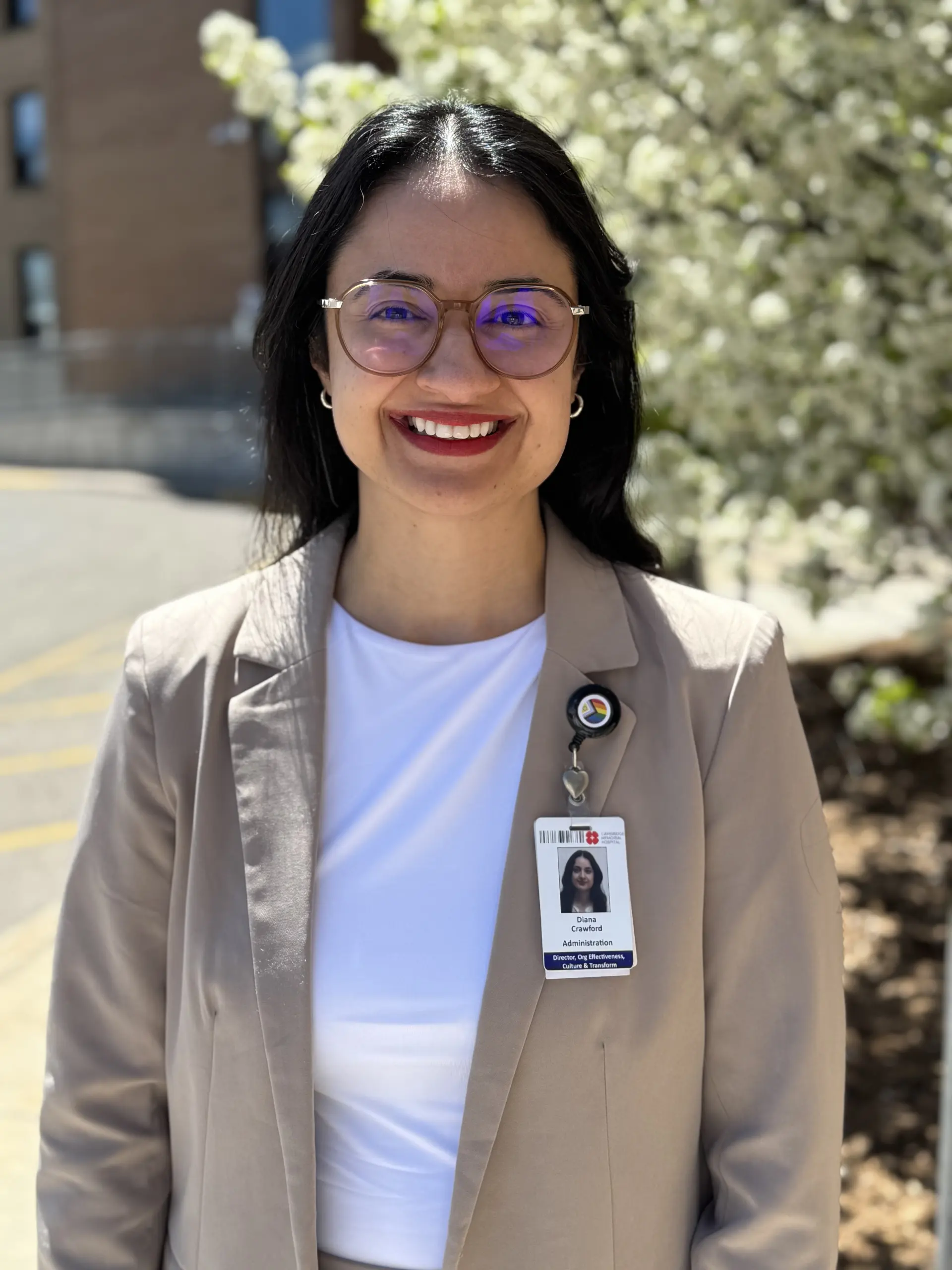
Meet Diana Crawford, our Director of Organizational Effectiveness, Culture & Transformation at Cambridge Memorial Hospital, whose story shines a light on the enduring strength of Kurdish people and the lived experience of the 1.5 immigrant generation.
Diana was born in Iran to Kurdish parents. Despite not having a country to call their own, Kurdish communities held tightly to their culture, identity, and resilience across generations. Diana saw that resilience first hand through her father’s advocacy work in Iran. “My father was deeply involved in Kurdish advocacy,” she said. “Fighting for justice, participating in protests, and standing up for our community.”
Watching that spirit shaped Diana’s understanding of strength—steady, persistent, and grounded in caring for others. Those experiences continue to influence how Diana approaches leadership, inclusion, and connection at CMH.
“Kurdish people have a lot of grit. We’ve faced so much discrimination and so many challenges throughout history, yet we hold onto that strength and keep pushing forward.”
When discrimination and political instability forced her family to flee, they made their way to Turkey before immigrating to Canada as refugees. Diana was eight years old, making her part of the 1.5 generation—individuals who immigrated before or during early adolescence. A group that faces the reality of balancing the pressure of adapting to a new country and protecting their cultural roots.
Like many 1.5‑generation kids, Diana learned English and became her family’s bridge to a new world. She was often the family translator, helping her parents navigate unfamiliar systems like healthcare. She understands the unique burdens immigrant children hold — the drive to succeed, the desire to repay their parents’ sacrifices, and the responsibility of building the life their families dreamed of.
Growing up in the 90s, she also felt the pressure to blend in. Diversity was not celebrated the way it is today. Being called “white‑washed” by friends was meant as a compliment. Over time, she noticed traditions like celebrating Nowruz (Iranian New Year) slowly fading as her family adjusted to Canadian life.
“Being part of the 1.5 generation was like being caught between two worlds. I wanted to fit in so badly, but it was hard watching pieces of my culture slip away.”
When she became a mother to Lina and Miles, everything shifted. Raising mixed-race children with her husband Keith, who has Dutch, British, and Scottish roots, made her think more deeply about identity and belonging. Diana hopes Lina and Miles can grow up with a strong sense of who they are and where they come from.
That desire led Diana to reconnect with Kurdish history, language, and cultural practices she feared she had lost. She reclaimed those pieces of her identity and is determined to pass them on, so her children never have to question their roots.
For Diana, participating in Voices of CMH is more than sharing a story—it’s an invitation to others who feel caught between identities.
“To anyone in the 1.5 generation, or anyone who may have lost parts of their heritage over time—don’t be afraid to learn. It’s never too late. Talk to your family. Ask for their stories before they’re gone.”
Diana is grateful for the life she and her family built in Canada. As Lina and Miles grow up, she hopes they remain grounded in who they are, and proud of the roots that shape them.