
In the bustle of an extended hospital stay, it’s easy to feel like you’re invisible. You’re just another patient fading into the background, especially when visits from family are seldom, if at all. The silence that comes with that can feel heavy.
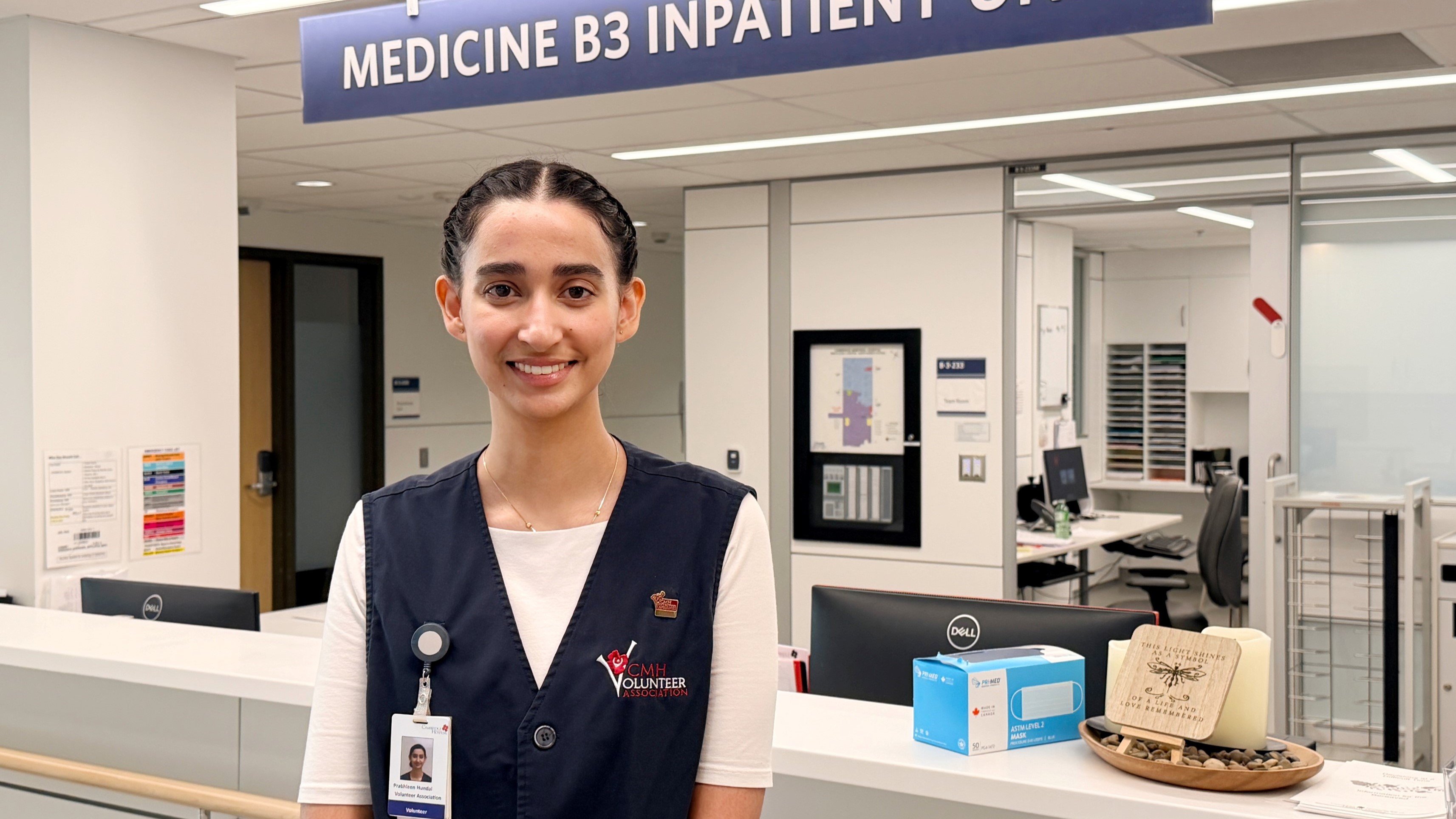
But when Prabhleen Hundal sat with a patient in her first year as a HELP Volunteer, that silent moment stuck with her: “She asked me to hold her hand, that’s it,” said Prabhleen, explaining the patient was upset, had no family, and facing long-term care alone. “So I did—and she cried.”
Prabhleen joined HELP three years ago to give back to her community. She has a strong relationship with her grandparents and was struck by the growing complex health issues they faced. She wanted to do more, and HELP seemed like a natural fit.
What is HELP?
HELP—Hospital Elder Life Program—is an evidence-based program designed to prevent delirium and functional decline in older adults during their hospital stay. HELP volunteers, like Prabhleen, support cognitive, physical, and emotional well-being. Taking a holistic approach, HELP supports patients to stay connected, oriented, mobile, and engaged.
“It’s not doctors, nurses, and PSWs doing everything—volunteers are part of the care team,” said Dr. Nicole Didyk, Geriatrician at CMH’s Seniors Health Clinic.
What does it address?
According to Dr. Didyk, changes in environment, disrupted routines, limited mobility, and isolation can increase the risk of delirium.
Delirium is a sudden change in thinking and awareness that can affect all ages, with older adults at a higher risk during extended hospital stays—about 40% of older patients may experience delirium while in hospital. HELP is a non-pharmaceutical approach designed to prevent it.
“Volunteers help reduce that risk by 30%,” said Dr. Didyk.
Dr. Didyk’s work sits at the intersection of medicine, psychiatry, neurology and pharmacology, with a focus on older adults who are medically complex individuals that often have cognitive impairments or dementia in their history.
While Dr. Didyk supports older adults clinically, she believes strongly in the value of non-clinical interventions, something she experienced firsthand when her own father was in hospital. “Despite being in the same building as me, I was not able to visit him every day,” said Dr. Didyk. ”He told me the HELP volunteers made him feel supported. I was grateful to know that he wasn’t alone."
Simple actions make a big difference
For Prabhleen, those interventions often look much simpler than people might expect. And it’s changed her perspective on aging, healthcare, and community.
She sees herself as part of a greater system, not just a cog in the machine, but a part of a team that comes together to provide meaningful, specialized care for older adults.
A HELP volunteer visit could involve setting up the patient’s room a certain way that brings a sense of control to their environment or gently orienting them to the time of day or year through conversation.
“It can bring them back,” said Hilary Ferguson, Elder Life Specialist. “Every session is unique as the needs of each patient may change based on their condition. No two visits are the same.”
Other interventions include physical exercise, walks down the hall, playing games, and encouraging them to drink water.
Turning experience into practice
Over the years, the program has continued to evolve through the experiences of its volunteers and patients.
For Prabhleen, that evolution meant recognizing that meaningful support isn’t always one-size-fits-all. While working with a Punjabi-speaking patient who was new to Canada, Prabhleen was able to connect with the patient in a shared language. Drawing on her understanding of Punjabi language and culture, Prabhleen partnered with Hilary to develop culturally familiar activities, and conversation prompts that reflected the patient’s interests.
“I could see how these activities brought a sense of belonging, especially to someone new to Canada who had moved here for her family and was now in hospital." said Prabhleen. "That experience can be scary.”
It’s experiences like these that have reinforced an important lesson and shaped how Prabhleen looks to the future: supporting older adults means understanding the person behind the patient. That the small adjustments we can make, rooted in culture, language, familiarity or personal interests create stronger connections and a positive patient experience.
That experience can extend beyond the patient. Families find reassurance knowing their loved one isn’t alone when they need to step away, whether to make a phone call, grab a coffee, or simply take a moment to recharge.
For volunteers, these moments reinforce the value of what they do.
“I hope they remember the small, intentional efforts that were made to support them,” said Prabhleen, who even took time to learn Portuguese phrases to bring to her next visit with a patient.
“I hope they remember that sense of belonging.”
Sometimes, the most meaningful intervention isn’t medical at all. Sometimes, it’s as simple as holding someone’s hand and giving them space to simply be.
A shorter version of this article was published in OHA's Health System News for October: Caring for Older Adults. Click here to read it.